

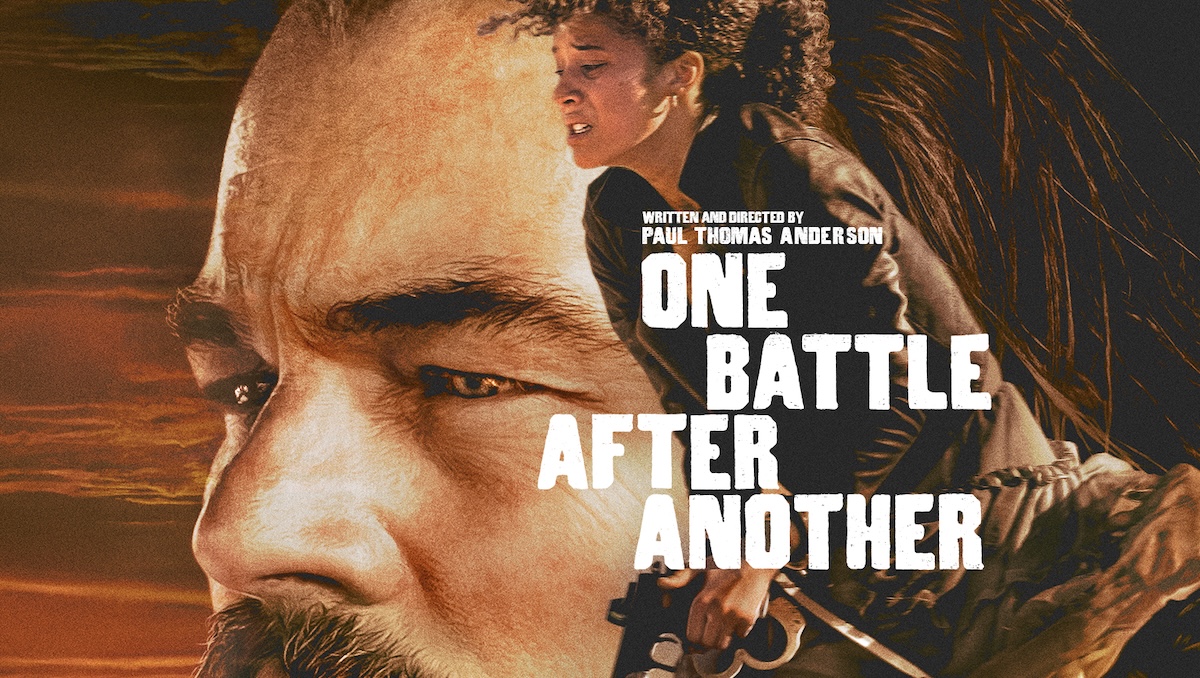
The uncanny timing and uncomfortable political resonance of Paul Thomas Anderson’s One Battle After Another likely helped the film win the Academy Award for Best Picture on Sunday night. The film was released before federal law enforcement shot and killed Renée Good and Alex Pretti on the streets of Minneapolis, but the film’s tense middle sequences, in which American cities are illuminated by the red-blue siren lights of armed members of the military executing a manhunt for racial minorities, hit too close to home for the Academy to resist.
Yet this is not the most interesting aspect of the film. At its core, the movie is about a relationship between a father and a child. More pointedly, it’s about a political activist whose priorities are turned upside down by his experience of raising a child as a single father. It’s a subtle, positive portrayal of how commitment helps men mature into the role of protector – a story too many young men need to hear.
Revolution always has been a young man’s game. The heady enthusiasm of youth fuels passionate commitment to hazy conceptions of justice, retribution, even vengeance. Once you have a wife, a kid, and a mortgage (or even, as in the film, just a trailer in the woods), “blowing up the system and starting over” suddenly sounds a lot less desirable. One Battle After Another offers us a glimpse of a father who commits to the specificity of family over the abstraction of the revolution. In so doing, the movie directly responds to the ongoing conversation about fatherhood and masculinity in contemporary America.
Young men used to have scripts to guide them from youthful enthusiasms to the cares and obligations of family life. They weren’t perfect; the role of father could sometimes veer a little too close to “walking paycheck” than fully present partner and parent. Still, there was a normative goal. Most men were expected to marry, and society saw the need for helping turn boys into men worth marrying. Today, marriage and family have become less the norm than one option among many, and we’ve become uncomfortable with declaring one path any better than any other. As a result, too many young men enter middle-adulthood adrift. By showcasing a dad who lets his priorities be reordered by a new arrival, One Battle After Another offers another model for twenty-first century American men—a vision of how fathers can serve as protectors and providers.
It’s rare for a film to implicitly make the case for the long-term gratification inherent in taking on the obligations imposed by fidelity and paternity. In a world in which the relationship between gender, care, and economic provision is rapidly changing, that conversation is worth unpacking.
The Revolutionary 1970s
In the film, we meet the armed resistance group known as the “French 75.” Though fictionalized, the group is patterned after real terrorist organizations of the 1970s, like the Weather Underground, FALN, Black September, and the Japanese Red Army.
As journalist Jason Burke explains in his recent book, The Revolutionists: The Story of the Extremists Who Hijacked the 1970s, what bound these disparate groups together was a sense that history felt newly contingent and ripe for the taking. These were broadly anti-imperialist movements, often explicitly Marxist, willing to use force in order to hasten the wheels of history and supplant Western capitalism. One such group was led by Ulrike Meinhof, an academic and journalist who was radicalized into the armed struggle against the “fascist,” “imperialist” government of West Germany. She became one of the founders of the Red Army Faction, often referred to as the Baader–Meinhof Group.
As Burke recalls, Meinhof’s violent political commitments and her status as a mother of two were an uneasy fit. As she planned her first operation, Meinhof “made some arrangements to go underground, taking out a mortgage on her apartment for 40,000 Deutschmarks.” These arrangements, however, were complicated by the fact that, as a mother, she had “commitments that would be hard to reconcile with a life of clandestine political activism. One of the first things she did as a fugitive was to call a friend to arrange for her daughters to be picked up from school.”
There’s a reason why few revolutionaries have had to work out carpool arrangements: to blow up the system, you have to be willing to lose it all.
Choosing the Better Part
In One Battle After Another, we see a father pull what we might call a reverse Meinhof. (Consider yourself warned: mild spoilers and expletives follow.) Leonardo DiCaprio stars as Pat Calhoun, who joins his paramour Perfidia Beverly Hills, played by a fiery Teyana Taylor, in taking to the streets to free prisoners, bomb political targets, and generally foment revolution.
Two become three, and Pat falls, hard, for the newest member of the family. Familial tension ensues: “I f—ing carried her nine months,” Perfidia complains. “And now he just gets to f—ing walk around and just swoon all f—ing day, like she’s his only girl… Am I weird for being jealous of my baby?” After an operation goes wrong, Perfidia puts the cause first and walks out (“I put myself first and I reject your lack of originality… You and your crumbling male ego will never do this revolution like me.”) She leaves; their new baby girl stays with Pat.
The film then jumps forward, finding Pat living off the grid as “Bob Ferguson” with his now-teenage daughter, Willa. He spends his days getting high and suspiciously checking out her potential suitors, until a villain from their past re-enters the picture. Pat blinks away the cloud of marijuana smoke to try to find and protect his daughter. Seeking a safehouse, Pat calls his old squad. He gets tripped up by a foot soldier who won’t give him additional information without an old passphrase. The self-importance and bureaucracy of leftist guerillas caught up in the philosophy of the oppressed is what makes the scene work, but Pat’s final kiss-off shows just how far he’s put the code of the revolutionary behind him: “You obviously don’t have kids, you f—ing idiot.”
We’re not used to seeing dads put family ahead of career on screen, even if “career” involves setting off explosives. Unlike Perfidia, who chooses the cause, Pat allows his life’s work to be superseded by something truly revolutionary: a life devoted to the young girl he raises as his daughter. As we later learn, Willa’s biological father is the cartoonishly evil military figure, played by Sean Penn, hunting her down.
DiCaprio, Hollywood’s most perennially eligible bachelor, is not cast in an action hero role, like Liam Neeson’s protective father in Taken, nor does he play the classic patriarchal protector of bygone Hollywood classics. Instead, he’s playing a Girl Dad™ whose choices have given him someone to protect, and something for his life to be about. He’s no one’s idea of a perfect dad; after Willa’s kidnapping, he laments having never learned to do her hair correctly, and not telling her the truth about her mother. But from the moment Willa enters his life, we see him give himself over to her. Midnight walks around a small apartment to calm a fussy infant; getting emotional when a high school guidance counselor tells him how the other students look up to his daughter.
The years of peanut-butter sandwiches and attempts at hair braiding take place off-screen, but they comprise the corpus of a life of unexpectedly devoted fatherhood before he ever needs to pull out a gun or attempt to hot-wire a car. In devoting his life to raising his daughter, rather than raising hell, Pat has chosen the better part.
What “Provider” Means Today
In a world in which marriage and partnership is less economically valuable than in the past, One Battle After Another encourages viewers to contemplate the roles fathers play in the lives of their loved ones. In many ways, the quiet work of fatherhood is more challenging than the sugar high of pledging fealty to radicalism.
Today’s Very Online revolutionaries struggle to understand and embrace this kind of masculinity. The manosphere is full of paeons to testosterone, swagger, and sexual charisma, with relatively little discussion about the more noble ends towards which men should devote those energies. As the feminist Catholic writer Claire Swinarski suggests, the keyboard courage of cosplay patriarchy is too often self-defeating. The focus on domination and status contests leaves many of its adherents unprepared for the ways that most men are actually called to put their body on the line for the sake of the ones they love. Swinarski writes:
these same men that claim they would go out onto the battlefield for their family can’t handle changing a diaper. It’s laughable to me that these men cosplay as The Providers but can’t—what? Wake up at 2 AM? See blood come out of a vagina? I’m sorry, what kind of Strong #Provider can’t haul his ass out of bed in the middle of the night? If a man truly can’t handle holding a baby at a barbecue I wouldn’t trust him to go into battle at a contentious HOA meeting, let alone the actual war these men long for.
Our world is older and wealthier now than it was in the 1970s. Today’s young men are more apt to be attracted to digital violence than la revolucíon; to simulating race cars on their gaming systems than drag racing down the streets. They are more likely to feel a sense of ennui and alienation than revolutionary unrest. To cure young men’s sense of spiritual displacement, we need to prioritize economic and political changes to help more young men feel like the hard work of family life is worth it. Right now, we are doing the opposite. Our politics caters to the concerns and interests of the elderly, with a political economy that subsidizes income support and healthcare for the older generations at the expense of the young. We’ve made it too easy to stand in the way of new projects, moved too quickly to turn addiction into a profit center, and made it too hard for young men to feel like working hard and playing by the rules will pay off. Young people need to feel like they have skin in the game.
Getting young men to feel bought in was sometimes used as a deliberate strategy to defuse the unrest of the 1970s. At one point, the Palestinian Liberation Organization (PLO) was faced with the difficult question of how to wind down their army of volunteers, who had been willing to lay down their lives for the cause. As Burke’s book recounts, the PLO’s scheme to demobilize their hundred most committed freedom fighters was by introducing them to “young, eligible, and attractive Palestinian women” with the promise of quite a honeymoon present: $3,000 cash, a Beirut apartment with all the amenities, and a stable job. Any couple who had kids within the first year would receive an additional $5,000. It wasn’t the end to terrorism in the Middle East. But it did reflect the understanding that giving young men a stake in the system is one way to keep things from imploding. Pat Calhoun would understand the same thing.
We need political and economic changes to help young men become the providers and protectors of a more egalitarian world. Those masculine roles look different than they did in the 1970s or before. But at its core, manhood still requires the same willingness to die—or, at least, to die to oneself—for more vulnerable others. That pursuit of virtue is a countercultural one, even revolutionary in its own way, in a world pockmarked by schemes to help you get rich quick and get laid quicker.
That quiet revolution of finding meaning in commitment and presence won’t be fought in the streets or on the barricades. Instead, it takes a repeated, internal struggle to learn to sacrifice and live for others—one battle, you might say, after another.