

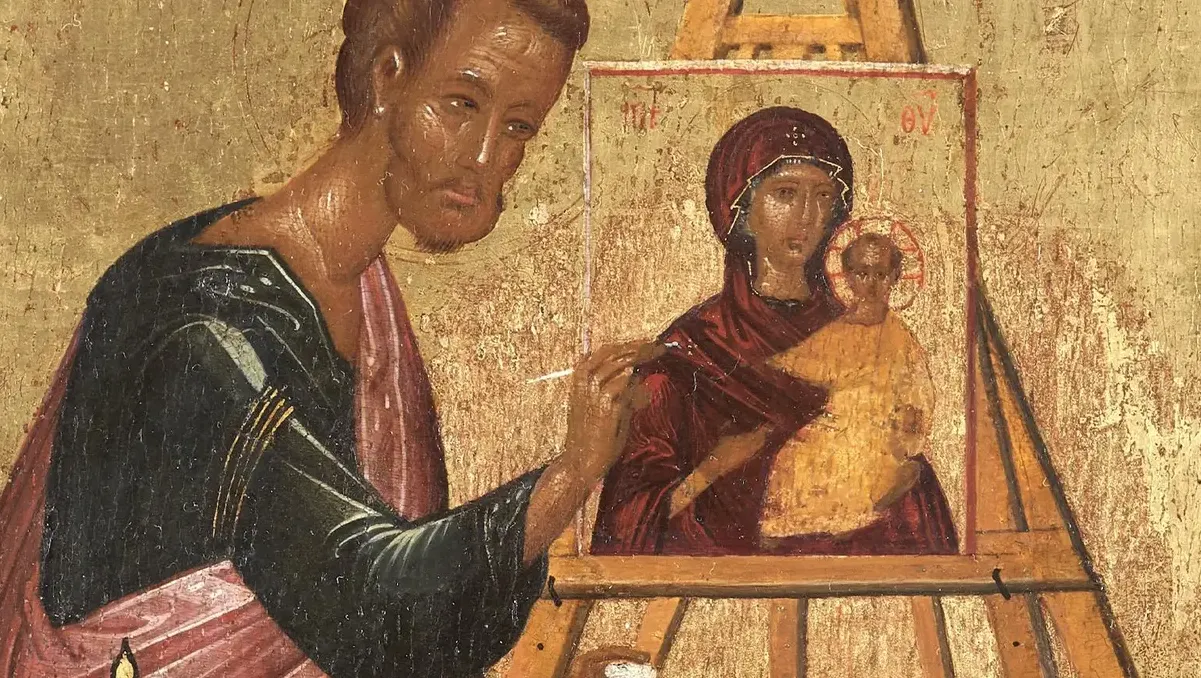
In Fairer Disputations’ inaugural essay, the late art historian Alisia Chase discussed the plethora of new female sculptures that invoke what she describes as “narcissistic feminism.” She argued, “Like the golden calf of old, the idol [of radical autonomy] demands sacrifice. Its worship can only end in destruction—not only of our children, but of our very selves.” My focus here is the relationship between icons and idols, in an era in which we have often been convinced and confused into forgetting our capacity to discern and to judge.
We have an intuitive sense of the ways in which images are both extremely powerful and formative. Yet a more fundamental truth is often obscured, namely that some images are artefacts that point towards the good, and others are harmful, insofar as they encourage vice and sin. For example, if young women are constantly comparing themselves to photographs and videos of other women, who are often heavily made up and using filters, this may lead to a terrible insecurity and obsession with their own appearance, as well as envy and inverted pride.
Let us begin with another old distinction: between icons and images more broadly conceived. Icons are of course a kind of image, but in the Christian tradition, these are sacred images that provide a portal or a window onto higher things. They transcend the saint or holy relation depicted and raise the venerator (viewer) to higher things—virtue, emulation, contemplation.
Icons that encourage what we can call good mimesis are much rarer than those that cause us to “feel bad,” that is to say, images that are designed to tap into our own insecurities, and to encourage us to want impossible and self-destructive things. When it comes to images, the secular West has increasingly adopted what can only be described as a free-for-all approach. We are constantly bombarded, surrounded by every possible image of every possible thing, without hierarchy or discrimination: a sea of chaotic signs and symbols, a mad semiosis.
The only human response to this is a kind of nihilistic numbness. In order to withstand the torrent, we tell ourselves a little story—we can cope, we can handle it. From the pornographic to the violent to the grotesque, we are “modern” insofar as we adopt a disinterested and ironic detachment towards the visual. But this is a very recent attitude, and one that isn’t really true. Until recently, the power of images, and the difference between veneration and adoration (and what we might today understand as hypnosis) were better known, both by those who sought to hierarchize and protect icons, and those who sought—for a variety of reasons—to destroy them.
What does this have to do with women? In this essay, I want to suggest that, in the struggle over images within the Christian religious tradition, women played a pivotal role in the decision made in the Byzantine era in favor of icons. Yet women have also played a significant part in various outbreaks of iconoclasm, both religious and secular. I will argue that there is a way in which we do, and ought to, engage in specific kinds of discernment regarding the direction of our attention towards images and icons.
As Erika Bachiochi has so eloquently argued, we have a responsibility to improve our rational and moral capacities. Since human beings have imaginative and aesthetic capabilities as well as rational and moral ones, I believe that we also have a responsibility to cultivate those sensibilities, enabling us to exercise our capacity for discernment in our engagement with images to evaluate whether or not they are conducive to human flourishing.
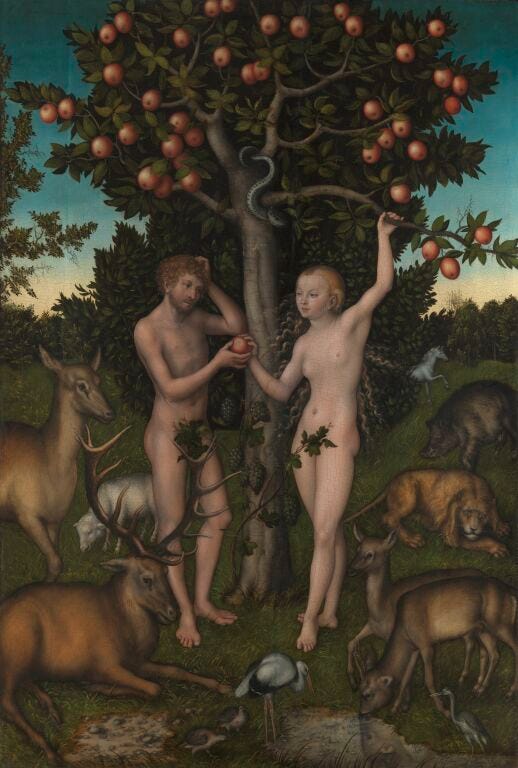
Iconophilic Women
Humanity has a basic choice when it comes to representation: to copy God’s creation or to prohibit representation as much as possible. There is a deep-rooted iconoclastic tendency in all the major religions. Christianity took a singular path because of the expression of God’s representation in the embodiment of Christ. As the Second Council of Nicaea (AD 787) put it, regarding “the revered and holy images” that proliferated in the Christian church (paintings and mosaics, on instruments and vestments, in churches and houses, of Jesus, Mary, angels, and saints):
The more frequently they are seen in representational art, the more are those who see them drawn to remember and long for those who serve as models, and to pay these images the tribute of salutation and respectful veneration. Certainly this is not the full adoration (latria) in accordance with our faith, which is properly paid only to the divine nature, but it resembles that given to the figure of the honoured and life-giving cross, and also to the holy books of the gospels and to other sacred cult objects. Further, people are drawn to honour these images with the offering of incense and lights, as was piously established by ancient custom. Indeed, the honour paid to an image traverses it, reaching the model, and he who venerates the image, venerates the person represented in that image.
“The honour paid to an image traverses it, reaching the model.” This vision of the impact of religious imagery is a far cry from the hypnotic power of the profane images of the secular world.
In the Byzantine struggle over images, women played a pivotal role in restoring icons to their place within worship. In fact, the Second Council of Nicaea—which put an end to the first period of iconoclasm—was convened by a woman.
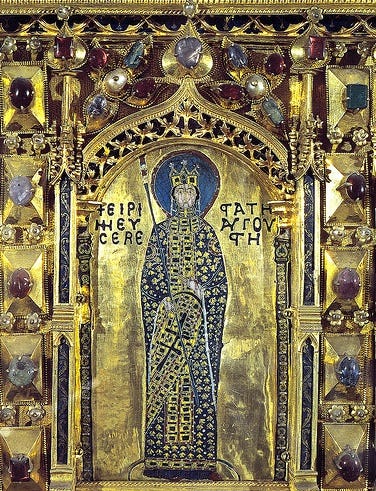
Empress Irene (750/756-803) was married to Emperor Leo IV, an iconoclast who tortured those caught venerating icons. Yet Irene, as the story goes, kept two icons under her pillow, possibly spurring her husband to ramp up his iconoclastic crackdown, and to forsake their marital bed. After his death, Irene convened the council that elevated the veneration of icons to an article of faith.
A similar story occurs in accounts of the later Byzantine Empress Theodora, who restored the veneration of icons after the second Byzantine Iconoclasm (814-843), claiming that her husband had recanted of his iconoclasm on his deathbed. In the iconophilic Orthodox tradition, there are also many stories of women rescuing icons from a bout of iconoclasm and carefully sending them out in boats. There are monasteries built on the sites where these icons landed in Greece, including at Mount Athos.
We are often told today that women and men respond differently to narrative and images. The standard modern line is that women are more moved by stories, and men respond to images. Yet the history of female iconophilia points to a different history, at least as concerns religious icons; the women who defended and restored icons to their place in the history of Christianity played a pivotal role.
The New Iconoclasm
Today, we have two kinds of iconoclasm in play. The first consists in the spectacular destruction of images, statues, buildings, and works of art in the name of some political cause. The difference between this type of iconoclasm and vandalism has always been open to question. The second type is stranger and perhaps more pernicious. It consists in covering up the distinction between sacred and profane images by flooding the visual field with images of all kinds. In this way, it obscures the distinction between veneration and hypnotism, thus eroding our powers of discernment and contemplation.
The latter kind—paradoxical destruction of the power of icons through an excess of images—is harder to identify, not least because the time and attention needed to reflect on representation itself is swept away. Images are very powerful, even, or especially, when we pretend that they are not.
In “The Precession of the Simulacra” from Simulacra and Simulation (1981), the philosopher Jean Baudrillard wrote: “One can see that the iconoclasts, whom one accuses of disdaining and negating images, were those who accorded them their true value, in contrast to the iconolaters who only saw reflections in them and were content to venerate a filigree God.” We might take issue with Baudrillard’s presentation of veneration here. Nonetheless, he is right to say that the iconoclasts do indeed understand the “true value” of images, that is to say, the importance they have in shaping a people, a history, a religion.
When today we see people burning buildings in France—such as the nineteenth-century town hall in Limoges—we understand that the desire for destruction consists in the abolition of the old order. The justification that rioters might give for such destruction does not entail that a new and better order might be built upon the ashes of the old. Rather, the desire for destruction is something that runs through humanity itself, as a stand-in for feelings of negativity. Iconophobia (the fear of images) is comprehensible, but there is a difference between choosing not to look and destroying images you don’t like.
Outbreaks of iconoclasm within Christianity—such as the sixteenth-century Bildersturm, when Calvinist Protestants destroyed Catholic icons and churches throughout Europe—point to a central tension in the visual field itself. This is true even when iconoclasts invoke religious edicts against graven images or idols as justification for their actions, or when they cite economic inequality as their motivation (e.g., calling on the church to give its money to the poor rather than spending it on art).
Anti-religious modes of iconoclasm proliferated from the French Revolution onwards. Think of the Soviet destruction of churches, or today’s environmental activists, who throw paint on artworks (“How can you care about beauty when the climate is in crisis?!”).
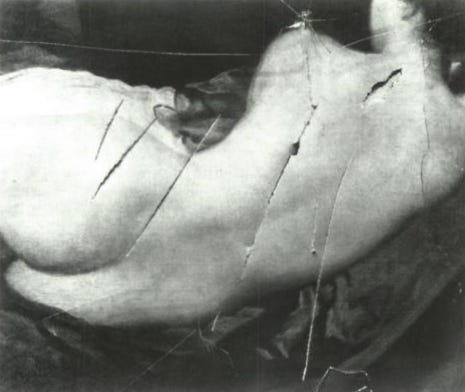
Women have played, and continue to play, their role in the destruction or damage of images, in both religious and secular outbreaks. The attack on Velázquez’s “The Toilet of Venus” (The Rokeby Venus) by suffragist Mary Richardson in 1914 with a butcher’s knife is an interesting example. Initially stating that this was a protest against the government’s mistreatment of militant suffragist Emmeline Pankhurst, Richardson later suggested that another motivation was her objection to “the way men visitors gaped at it all day long.” Worthy political causes often mask more complex human feelings of some of their adherents, such as envy and desire.
Despite everything, we have a sense of what is good, beautiful, and true. We know the kind of people who want the best for us and who would make good mentors: the kinds of people worth emulating. We can practice discernment too when it comes to images. We can restore the difference between icons worth venerating and images that do damage. We can think through the relationship between virtue and imagination, as complex as it is. We ought not to worship uncritically but should seek to understand the relationship between God’s creation of our own nature and our capacity to create and appreciate.
Turning away from harmful images deprives them of their power over us, just as giving our attention to icons can elevate us and offer a portal towards the divine. Honing our powers of judgement is a lifetime of work, but work at it we must, lest we drown in a chaos of signs.